

前几日做家务时刷到Youtube的一个视频,让我回想起来以前上学时的一些事。
这个视频是讲平庸之恶的。这个名词互联网上已有许多讨论和故事,简单说,平庸之恶就是每一个普通人收起对善恶的判断,对不公平或施暴视而不见,对权威下达的命令“平庸”地服从。举例来说,纳粹德国管理集中营大屠杀的大部分军官就是这样,交谈起来看似和普通人并无两样;但当屠杀命令下达时,执行屠杀的军官普遍认为这些命令是主导大屠杀的权威者应当负责的,自己只是无情的执行者,削弱了自己的主体性,认为自己不应当负责。
更进一步的,有些狂热分子比平庸还过分,进入更危险的地步。你大概也能猜到:用善意的目的包装自己的恶行,让自己觉得自己做的事情是正确必要的。这种我称之为狂热之恶。有些人可能会不明白这种人是怎么存在的,我也不好说,不过这种人确实存在,看看这张图就懂了:

不熟悉的朋友可能不太明白,简单说,这张图在讽刺张某某的言论。张某某的种种演讲就是在洗白一件事:某些狂热(热衷于)某些理论的大人物为了实现伟大目标,做了不好的事。(虽然咱也不知道他心里到底想的什么)张某某显然已经和狂热分子站在了同一立场了。这种恶,虽然比起平庸之恶占比更少,但是往往威力巨大。回看世界历史,确实是这一小撮人领导、裹挟大批的平庸之人,一起作恶。简单列举,除了纳粹首领希特勒,还有旧日本帝国天皇和他的臣民,为了实现所谓“大东亚共荣”发动战争;柬埔寨波尔布特为了实现“理想社会”不择手段发动武装力量清除大量人口;伊朗鲁霍拉·霍梅尼为了宗教目的,以残忍手段处决反对派大学生,以及种种暴行……世界各地的悲剧数不胜数。
虽然不好细说,但大陆也是挺多的。比如,反右,大饥荒时民兵射杀逃荒者,以及1966年开始的十多年发生的种种事情。
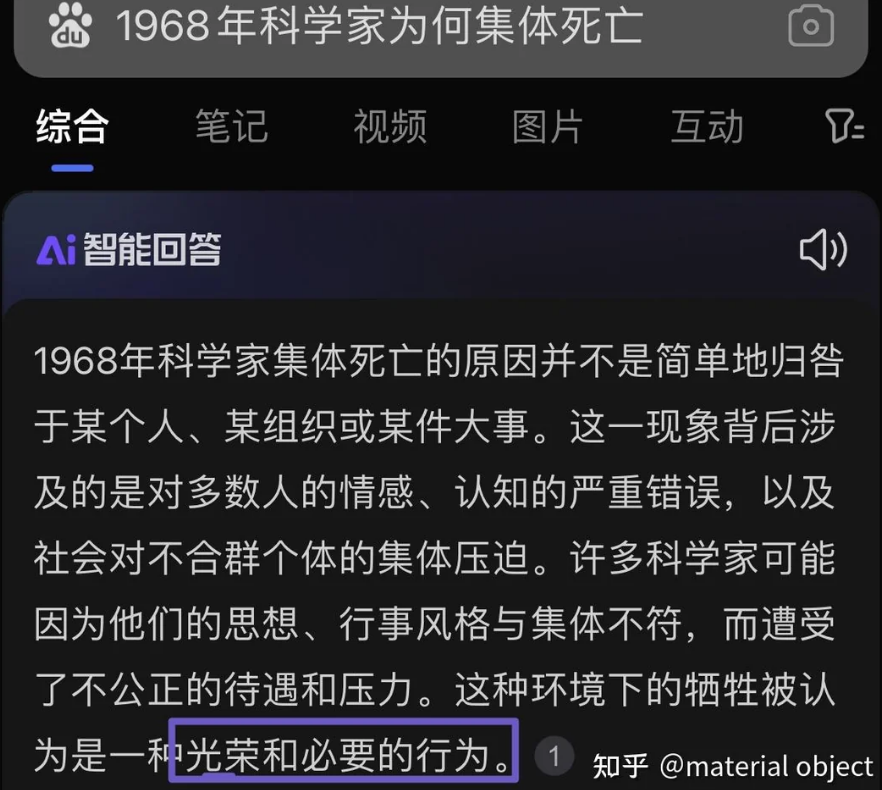
有人可能会问为什么挑国内事情说?世界那么多示例岂不是说明大家都一样吗?废话,我要是能天天见日本人,身边都是日本人,那我当然会写日本人的毛病,我还要用日语写。我有几个朋友在日本生活,我还真知道不少。可惜我见不到,那我还是要写自己能见到的问题,毕竟身边的事才是真和我有关系的。而且,大家一样烂不是不去想问题的借口。不过我并不想去点评什么历史上的大人物、大事件,我没这水平。我只在这里记录一下我的经历,因为我如果不能从身边发现和反思这些人性的脆弱点,那我还是麻木的植物人。
从我个人的回忆来看,这狂热与平庸之恶,病根是到处生长。初中时我们的班主任随机任命学生作为告密者,负责悄悄向老师打报告哪些谁在上课台下聊天最多以及其它各种情况;被举报的同学会被写检讨和罚站,严重的约谈家长。作为告密者的学生,往往是头一次手握这种权力,一定要狠狠用。我就是其中之一,我在这里尽可能真诚的忏悔,虽然单薄的文字无法表达心情的沉重。对于当时被我记名的李同学(男),真心对不起,虽然在初中后期我与你关系缓和,但这件事始终在我心中过意不去。我现已不再是麻木之人,我的思想转换也让我付出了应有的代价。
权力是最好的春药。当主体尊严被支配者剥夺、换取来微薄权力,一定要用权力为难更低微者以换取尊严——这就是平庸之恶;当然,在班主任的视角里,她觉得这是让我们提高成绩的好办法,是将大脑塑形成服从体制的“成长的阵痛”、是管理近百人大班级的“暂时的困难”——这就是狂热之恶。在这个变态的专制班级,甚至三年内没有男女生谈恋爱——因为一旦被发现,下场严重:劈里啪啦被老师打一顿是可选套餐,约谈双方家长是基础套餐。这种事情在发达城市和外国孩子听来可能会不可置信,闻所未闻。
的确,初中这个班级让我成绩确实还说得过去,硬生生逼出来的,比如晚上写作业写到凌晨,仍然写不完,只好第二天早晨不到六点起来写,六点五十出门上学;晚上六点甚至七点才放学,放学时间看老师安排——成绩有普遍问题的话放学一个别走,发卷子考试,写完再走。想想真是无敌了,能在这种斯巴达班级活下来不自杀,而且没有明显心理问题,简直是好样的。
上了大学,初中的时空距离越来越远,我以为能远离狂热和平庸之恶了。我还真是天真了。由于中国大陆大学有班级制度,大学也会在每个班的学生中挑忠诚和配合的那个秘密选他为“信息员”,负责将班级其它学生行为和思想收集上报。朋友就经历过被举报,他一次校外打篮球时和社会人士起了冲突,不过没有多纠缠就独自返回宿舍洗澡睡觉了;但毕竟球场上人很多,消息不胫而走,让信息员知道了。不过这消息似乎口口相传时出现了失真,信息员以为我哥们和社会人打架被关在派出所,这么报告给了学院领导,导致学院副书记去派出所捞他,据说还准备捞回来给他个处分(因为我们哥几个曾经因为某些事情和她意见相左导致她很不爽我们小团体),还好她去派出所扑了个空。
毕业数年,我们至今都不知道信息员是谁。我猜测,留校的那几个同学中有信息员的可能性大一些。不过事情也过去了,再纠缠也没意思。不过,我倒是希望如果哪位闲逛看到我的博客,可以长个心眼:防人之心不可无,告密者就在我们身边。因为这些年,病根不仅没被治,反而还加重了。我不说你应该也知道,社会上种种新闻和言论都透露着一股肃杀的气息。
人性是和制度适配的。群体行为的改变首先要从制度的改变开始。所以我不太赞同高估或者低估国人的品性,我经历过有告密者的集体,但我也见过善良的人向我伸出援手。我们所抨击的所谓民族性其实也是普遍的人性,只是受到不同文化和历史影响,会有优先表达的选择倾向。比如有些地方喜欢以家族为单元互相帮助,可能更加团结一些;比如有些疲于生存的地方人群会更加原子化和麻木。作为普通人,当你没有改变制度的力量,当你感觉到孤立无援、少子化和原子化,当你看到在教育中有美化和鼓励告密行为,当你看到媒体在齐声宣传伟大的、狂热的理论,并且修改法条规章为普通人平庸之恶背书,你应该能感觉到,历史的车轮有周期,它滚回去了。在这种历史大势中,放下谏言情节,加强身体素质,见证历史规律。
保重。
Fanaticism and the Banality of Evil
A few days ago, while doing housework, I stumbled upon a YouTube video that reminded me of some experiences back in my school days.
This video was about the “banality of evil.” This term has already been widely discussed on the internet, accompanied by many stories. Simply put, the banality of evil refers to ordinary individuals setting aside their moral judgment of right and wrong, remaining indifferent to injustice or violence, and “banally” obeying orders from authority. For example, most officers managing the Nazi concentration camps during the Holocaust were like this—talking to them, they seemed no different from ordinary people. Yet when orders to execute mass murder were issued, the officers generally believed that these commands were the responsibility of the authorities directing the Holocaust, while they were merely unfeeling executors. By relinquishing their own agency, they believed they should not be held accountable.
Going a step further, some fanatics go beyond banality into even more dangerous territory. As you might guess, this involves wrapping their behavior in “good intentions” so they can feel that what they are doing is necessary and correct. Some people might not understand how such individuals exist; I can’t say for sure either, but they certainly do—just look at this image to understand:
For those unfamiliar, this image satirizes certain remarks made by a Mr. Zhang. His various speeches are essentially whitewashing one thing: that certain figures who are fanatical about (or passionate about) certain theories have committed terrible acts to achieve a great goal (though no one really knows what he actually thinks in his heart). Mr. Zhang has clearly stood on the same side as these fanatics. While this kind of evil accounts for a smaller proportion compared to the banality of evil, its impact is often catastrophic. Looking back at world history, it is indeed this handful of people who lead and coerce large numbers of ordinary people into committing evil together. To list a few simple examples: besides the Nazi leader Adolf Hitler, there were the Emperor of Japan and his subjects who launched wars to achieve the so-ahead “Greater East Asia Co-Prosperity Sphere”; Pol Pot in Cambodia, who spared no means and used armed forces to eliminate a vast number of people to achieve an “ideal society”; and Ruhollah Khomeini in Iran, who used brutal means to execute opposing university students for religious purposes, along with various other atrocities… The tragedies around the world are too numerous to count.
Though it is inconvenient to detail, there are plenty of such examples domestically as well. For instance, the Anti-Rightist Campaign, the militia shooting refugees escaping famine during the Great Chinese Famine, and various events that occurred over the decade or so starting in 1966.
Some might ask: why pick domestic issues to talk about? Don’t so many world examples show that everyone is equally bad? That’s missing the point—if I could see Japanese people every day and were surrounded by them, I would certainly write about their flaws, and I’d write it in Japanese. I have a few friends living in Japan, so I actually know quite a bit. Unfortunately, I can’t see them every day, so I still want to write about the problems I can witness firsthand; after all, things around me are what actually relate to me. Besides, “everyone is equally bad” is no excuse to refrain from reflecting on problems. However, I don’t intend to comment on big historical figures or events—I don’t have that capability. I am only recording my own experiences here, because if I cannot discover and reflect on these fragile points of human nature from my surroundings, I remain an unfeeling, numb entity.
Looking back at my personal memories, the roots of this fanaticism and banality of evil grow everywhere. In middle school, our homeroom teacher randomly appointed students as informants, tasked with secretly reporting to the teacher who talked the most during class and various other situations. Reported students would be forced to write self-criticisms and stand as punishment, or in severe cases, their parents would be called in for a conference. As an informant, a student holding this kind of power for the first time would inevitably make full, ruthless use of it. I was one of them, and I sincerely repent here as best as I can, though thin words cannot express the heavy burden in my heart. To Student Li (a male classmate) whom I reported back then: I am truly sorry. Although our relationship softened in late middle school, this matter has always weighed on my conscience. I am no longer a numb person, and the shift in my thinking has come at its due price.
Power is the ultimate aphrodisiac. When a person’s dignity is stripped away by a dominant authority, they use the meager power granted in exchange to make life difficult for those even lower than them to regain a sense of dignity—that is the banality of evil. Of course, from the homeroom teacher’s perspective, she felt this was a great way to boost our academic results, a “growing pain” to shape our minds to conform to the system, and a “temporary hardship” in managing a class of nearly a hundred students—that is the evil of fanaticism. In this abnormal, autocratic class, not a single boy and girl dated during those three years—because once caught, the consequences were severe: getting beaten up by the teacher was an optional extra, while a meeting with both sets of parents was the standard package. Such things might sound unbelievable and unheard-of to children raised in developed cities or abroad.
Indeed, this middle school class did manage to keep my grades acceptable, squeezed out through sheer force—like writing homework until past midnight, still failing to finish, and having no choice but to wake up before 6:00 AM the next morning to keep writing before heading out to school at 6:50 AM; or being dismissed from school at 6:00 PM or even 7:00 PM, depending on the teacher’s mood—if there were widespread issues with test results, no one was allowed to leave until we sat for and finished another exam paper. Thinking back, it was truly absurd. To survive such a Spartan class without committing suicide or developing obvious psychological issues was quite an achievement.
When I entered university, as time and space put distance between me and middle school, I thought I had left fanaticism and the banality of evil behind. How naive I was. Because universities in Mainland China have a class system, the university would also secretly select a loyal and compliant student in each class as an “information officer,” responsible for collecting and reporting the behavior and thoughts of other classmates. A friend of mine experienced being reported. Once, while playing basketball off-campus, he got into a conflict with some outsiders, but without escalating it further, he returned to the dormitory alone to shower and sleep. However, since there were many people on the court, news spread fast and reached the information officer. The story seemed to get distorted as it passed along: the information officer thought my friend had gotten into a fight with outsiders and was detained at the police station, reporting it to the college leadership accordingly. This led the deputy secretary of the college to go to the police station to bail him out—supposedly also intending to bring him back to issue a disciplinary sanction (since a few of us in our small group had previously disagreed with her on certain matters, making her quite unhappy with us). Fortunately, she made a wasted trip to the police station for nothing.
Years after graduation, we still don’t know who that information officer was. I guess it’s more likely to be one of the few classmates who stayed on to work at the university. But that’s in the past now, and there’s no point in dwelling on it. However, if anyone happens to stumble upon my blog, I hope you stay vigilant: always be on guard, as informants are right around us. Over these years, the root cause hasn’t been treated; instead, it has only worsened. You probably know without me saying that various news items and public commentary in society all convey a chilling, oppressive atmosphere.
Human nature adapts to institutions. Changes in collective behavior must first begin with changes in the system. Therefore, I don’t agree with overestimating or underestimating the national character of Chinese people. I have lived in groups with informants, but I have also seen kind people reach out to help me. The so-called “national character” we criticize is actually common human nature; it’s just that under different cultural and historical influences, there are different preferential tendencies in how it is expressed. For instance, some places prefer using the family unit to help one another, making them perhaps more cohesive; while in places where people struggle just to survive, individuals become more atomized and numb. As ordinary people, when you lack the power to change the system, when you feel isolated, face declining birth rates and atomization, when you see education glorifying and encouraging whistleblowing, and when you see the media in unison promoting grand, fanatical theories while modifying laws and regulations to endorse the banality of evil among ordinary citizens—you should realize that the wheel of history has its cycles, and it is rolling backward. In such a grand tide of history, let go of the urge to offer unheeded advice, build up your physical health, and witness the laws of history unfold.
Take care.
评论(0)
暂无评论